A Thanksgiving Thank You—from My Studio to Your Heart
Victoria Pavlov
24 Nov, 2025
In this Thanksgiving week, I want to pause and send a heartfelt Thank You to each and every one of you, my dear readers. Thank you for stepping into my creative space, for your kindness, your encouragement, and the quiet support you’ve shown through my difficult moments. You’ve lifted me more than you realize, and I appreciate you deeply. My hope is that this Thanksgiving brings you exactly the kind of warmth you’re wishing for— a big, loud dinner with family and friends… a soft, cozy evening shared with just a few people…or even a peaceful dinner for one, filled with calm and comfort. We spend this season saying Thank You to the people around us—family, friends, coworkers—but this year, I want to add one more to your list: Say Thank You to yourself. Honor who you are. Acknowledge how far you’ve come. You deserve that kindness too.
To help you settle into the cozy season, I’ve created seven beautiful, ready-to-print coloring pages, perfect for all ages. Grab your favorite colored pencils, or take the fun digital with Adobe Fresco, Photoshop, or Illustrator. I hope these pages bring a little extra warmth, creativity, and ease to your holiday celebration.
From my studio to your home, I’m grateful for you.
How to Create a Dramatic, Custom Winter Card Using Only Two Layers
Victoria Pavlov
19 Nov, 2025
Hello, my dear reader, and happy wintertime! As much as I love warm weather and spending time outside, I couldn’t be happier to see the cooler weather. (This year we had a super hot summer and autumn in Atlanta), so yes, hellloooo winter! Today, in this blog post, I will share with you the easiest way of creating a custom Winter Card in Photoshop. Yes, I am reading all your requests and am always happy to see them! So, shall we start?
For this card, you will need only two images. (If you want to use more, you absolutely can!) First, open your background image in Photoshop.
Now, open your second image. Select your main subject, copy the selection (Ctrl+C or Cmd+C), and paste it onto the background image.
Position the main subject exactly where you want it on the background.
Tip: Because I am positioning the main subject in a chair, I will temporarily bring the subject’s layer opacity down(e.g., to around 50%). This allows for a better preview of the background layer, helping me scale the subject correctly to fit the chair. Once I have the right position and size, I will set the layer opacity back to 100%.
While my main subject layer (the Elf) is selected, I will use the Contextual Task Bar to quickly remove the original background.
Tip: If the Contextual Task Bar isn’t visible, you can easily open it by going to Window > Contextual Task Bar in the main menu.
Photoshop has now removed the background and automatically created a Layer Mask on the Elf layer.
Click on the Layer Mask thumbnail (the black and white square next to the layer image) to select it.
Select the Brush Tool (B key) and choose a soft-edged brush.
Set your foreground color to Black (D key, then X key if needed).
Paint over the areas of the Elf (like the parts that should be behind the chair’s arm) that you want to hide.
Tip: Painting over the layer mask with Black will hide the desired areas without erasing them permanently. You can always bring those areas back by switching your foreground color to White and painting over the mask again!
Now it’s time for some Photoshop magic!
My two layers have completely different daytime colors, shadows, and overall tones. Now, in Photoshop, we can fix this entire issue in just one click! Yes, one click! While the Elf layer is selected, look at the Contextual Task Bar and click on Harmonize. Watch the magic happen right in front of your eyes!
Did you see what Photoshop did? It harmonized the two layers by matching the colors and tones, added a shadow on the chair underneath the Elf’s left side, and even added moonlight to the Elf in the right place! Isn’t it incredible that we can achieve this magic in ONE SINGLE click?
Tip: Photoshop generated three variations. Feel free to use any you like the most. Photoshop created a new harmonized Elf layer. You can now delete the original Elf layer, or simply hide it if you prefer to keep a backup.
Final Polishing Steps
Now it’s time for the last step! I almost always apply final polishing steps to my composition using the Camera Raw Filter. To prepare for the final edit:
Save your document as a PSD file (your original Photoshop master file).
Next, you can delete the original Elf layer (the one you previously hid).
Finally, merge all visible layers (Ctrl+Alt+Shift+E or Cmd+Option+Shift+E), creating a single flattened layer for final adjustments.
With your merged layer selected, go to Filter > Camera Raw Filter (Shift+Ctrl+A or Shift+Cmd+A).
In the Camera Raw workspace:
I increased the Exposure slightly for overall brightness.
I also increased the Highlights to add extra crisp light from the moon.
By the end, I moved the Blacks slider slightly to the left to add a little more drama to the image.
Finally, in the Presets workspace, I applied the PE08 preset from the Portrait: Edgy library to add an extra winter magic feeling to the image.
And just like that, we have created a custom winter card in Photoshop using only two images!
Note: Remember, you can customize your card with bright or dark tones, and you can add text if you like, as well! I made my card lean towards the darker tones because, you know, it’s a magical fantasy night, and I decided to add more drama to the night scenery!
I hope I’ve inspired you to open Photoshop and make the magic happen! Remember, the magic doesn’t need to be created using a ton of tools or a ton of steps. The key to enjoying creative magic is using the right tools. Thanks to the Photoshop team, we have those right tools under our fingertips to make our Photoshop workflow faster, better, and, most importantly, to ENJOY creating!
Speaking of holiday magic, if you’re looking for unique ideas for your friends and family this season, I put together a separate Holiday Gift Guide full of inspiration. It’s just a curated list of things I love—no pressure to buy, just happy sharing!
The all-new Adobe Firefly? Yes!
Victoria Pavlov
28 Oct, 2025
Hey there, creative minds! I couldn’t wait to share my thoughts on the all-new Adobe Firefly. Let’s face it: AI is now an undeniable part of how we work. And Firefly isn’t just making things easier—it’s making them dramatically more creative and more organized. Imagine: ideation, project starts, editing, and final polish, all centralized in one seamless space.
Generative AI is a powerful new tool that unlocks fresh possibilities and accelerates manual tasks. The combination of Adobe Firefly and your favorite apps—like Photoshop, Illustrator, and Lightroom—elevates your creativity to a new level. By letting AI handle the tedious work, you free up more space to imagine, create, and push your creativity further.
Note: I’m going to break down the most exciting updates in this post, and you can expect a series of hands-on videos over on my YouTube channel soon!
Let’s jump into what’s new!
Adobe Firefly welcomes us with a completely redesigned UI and it more streight forward, orginized and easy to navigate.
We can start a project right from the welcome screen, either jumping straight into the incredible generative experience or selecting from the “Recommended features” and “All features” workspaces. A quick note: I love the “Generation History” feature is a fantastic addition. Being able to preview all my recent generations directly on the welcome screen is super helpful and saves so much time!
Starting any project is simple: just click the blue “+ New” button. This opens a powerful menu, presenting you with two clearly defined categories to choose from: This organization makes everything so easy!
New Flexibility in Adobe Firefly on the Web!
When generating images, video, and audio, you can now access the industry’s leading AI models. Choose between cutting-edge AI from Adobe or select models from our partners, including OpenAI, Google, Runway, and more! All these powerful models are now right at your fingertips—ready for any project.
Whether you choose to “Create new” or “Generate new,” you’ll instantly enter the dedicated workspace to harness the magic of Generative AI for your project.
Personally, I love spending time in the “Ideate” space. It’s my dedicated area for gathering initial concepts and bringing them together on customized Boards. I’ve created so many: “Mood,” “Ideas,” “Inspirations,” and more. For me, this is the crucial space where I visualize how to make the impossible possible—or, more simply, how to materialize my dreams into reality.
Production Workspace: Your AI-Powered Efficiency Studio. Exactly as the title suggests, this is my dedicated Production Studio. It’s designed to eliminate the most time-consuming and repetitive tasks from your workflow. This workspace is a massive time-saver, allowing you to skip the grind and let AI handle the heavy lifting. Case in point: background removal. If you, like so many others, constantly face the repetitive chore of removing or replacing backgrounds from similar image types, your days of manual effort are over! Ready to simplify your work? Just click on the “Remove backgrounds” tab and follow the simple instructions to let the AI take over.
Be sure to check out the Quick Actions Library! You’ll find a wide variety of time-saving actions that you can plug right into your existing workflow. It’s the perfect place to start optimizing your process!
Ultimately, the latest update to Adobe Firefly isn’t just a set of new features; it’s a dedicated workspace built for modern creative efficiency. By combining the speed of AI for repetitive chores like file prep and background removal (thanks to the Production Workspace) with the boundless creative potential of multi-model generation (from Adobe to partners like OpenAI and Google), you can finally stop wasting time on the tedious tasks. Your Ideate space and the Quick Actions Library are your new secret weapons. Go explore the redesigned interface, simplify your workflow, and let the AI handle the heavy lifting. The only limit now is the scope of your imagination.
It’s time to let the AI work for you. Go try it out
This whole video is a Firefly moment. Every frame, every motion, every sound effect — all created in Adobe Firefly. AI didn’t just assist… it produced.
Welcome to ChatGPT Atlas: The AI Desktop Revolution
Victoria Pavlov
22 Oct, 2025
The future of AI just landed on your Mac. ChatGPT Atlas isn’t just another update — it’s an evolution. Think of it as your creative co-pilot, memory keeper, and research assistant all living inside the new ChatGPT desktop app.
How to Get Atlas
No separate install, no weird setup. Atlas is built right into the ChatGPT desktop app for macOS (with Windows, iOS, and Android versions coming soon). Here’s the quick download path:
Sign in with your Free, Plus, Pro, or Go account — Atlas activates automatically.
Already have the app? Just update it, and you’re in.
You’ll know you’re running Atlas when you see the new icons at the bottom of your chat window — globe, rocket, and more.
What’s Inside Atlas
Atlas combines several major powers under one sleek interface:
📎Browsing (the blue globe icon): lets you pull live data straight from the web. When it glows blue, you’re online — real-time answers, breaking updates, or research are just a search away. 📎Agent Mode (rocket icon): automates tasks, schedules reminders, and runs workflows that go beyond chat. 📎Context Memory: remembers key details from your conversations so you can build ongoing projects without repeating yourself. You can view or manage it via Settings → Personalization → Memory. Together, these make ChatGPT feel less like a tool — and more like a teammate that remembers, researches, and adapts.
Tips & Tricks for Power Users
📎Use the globe wisely. Keep it off when you want a quick creative brainstorm or focused writing help; turn it on for research-heavy topics or live updates. 📎Tap into Memory. Atlas can now recall what you’re working on — your projects, tone preferences, or past instructions — so each session feels seamless. 📎Test Agent Mode. This feature is still rolling out, but it’s designed to help you delegate tasks (“remind me to post at 9am,” “summarize new docs weekly”). 📎Combine browsing + creativity. You can search references, gather facts, and then pivot into creative mode without ever leaving the chat. 📎Stay updated. Since OpenAI is iterating fast, check “About ChatGPT” in Settings — if it says Atlas, you’ve got the latest magic installed.
Why It Matters
Atlas marks a shift from static AI chats to a more dynamic, context-aware ecosystem. For creatives, educators, and innovators, it means your workflow just got smarter and more integrated. Whether you’re designing, teaching, or building ideas, Atlas keeps your momentum going.
I hope this post helped you understand what ChatGPT Atlas is and how to make the most of it. My dear readers, thank you so much for always being here — your curiosity and support mean the world to me. If you have any questions about Atlas or want me to share more tips, please don’t hesitate to ask in the comments. I’m always happy to help and explore new creative tools together with you.
If you enjoyed this post and want to support my work, you can leave a small tip using the button or by scanning the QR code below. Every contribution helps me create more tutorials, art, and resources for our creative community. Thank you so much for your kindness and support — it truly means a lot to me.
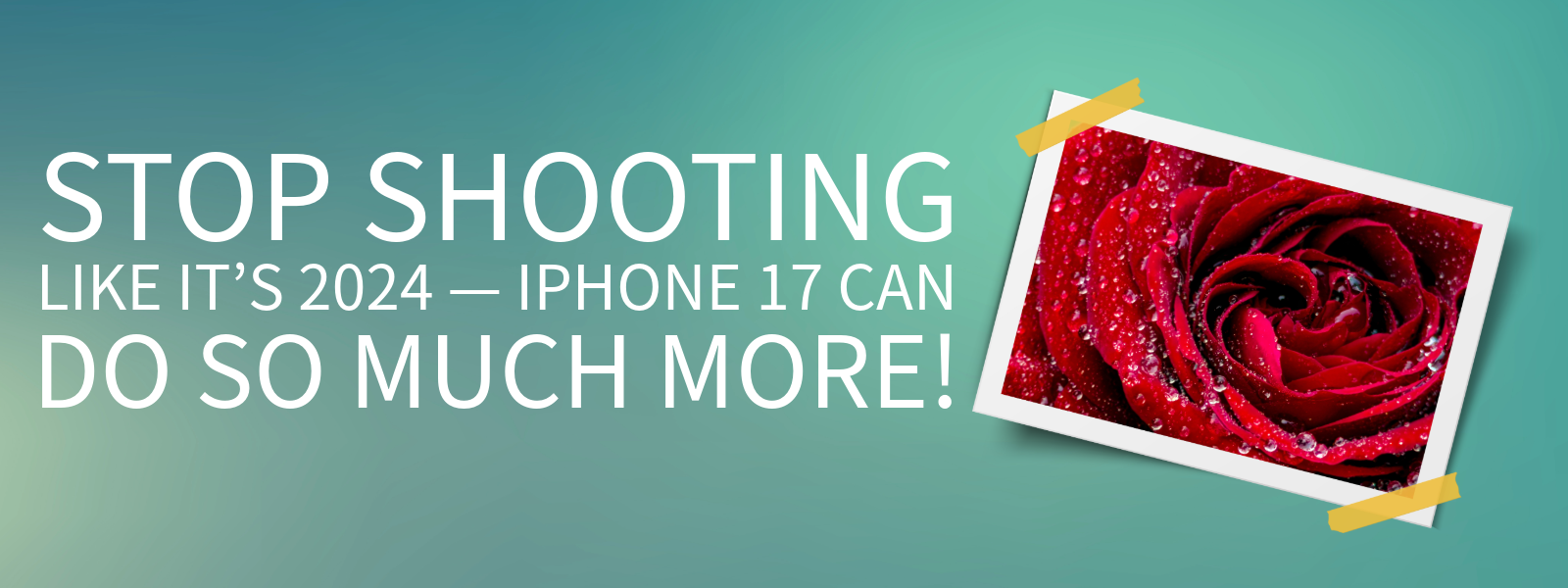
Stop Shooting Like It’s 2024 — iPhone 17 Can Do So Much More!
Victoria Pavlov
17 Oct, 2025
I was recently asked about the single most impactful tip for absolute beginners to get the most out of the iPhone 17. So today, my dear readers, I’m excited to share a few simple yet powerful tips for taking photos and videos with the iPhone 17. I personally use the iPhone 17 Pro Max, so all the screenshots and examples in this post are based on my own device.
The single most impactful tip to get the most out of your iPhone 17 is to master the new Center Stage front camera for photos and videos.
This isn’t just a simple megapixel bump; the new 18MP front camera has a square sensor that allows you to: Shoot Landscape Videos/Selfies Vertically: You no longer need to physically rotate your phone to switch between portrait and landscape orientation for the front camera. You can keep a comfortable vertical grip, and the phone’s software will seamlessly adjust the frame. Utilize Center Stage for Photos: For group selfies, the camera uses AI to automatically expand the frame to make sure everyone is included, and can even rotate the frame from portrait to landscape as needed. How to use it:
Open the Camera app and switch to the front-facing lens.
In the viewfinder, look for the Orientation switch icon (usually near the shutter button) to manually toggle between portrait and landscape modes while holding your phone vertically.
For automatic framing, tap the Center Stage icon (looks like a person in a frame) and ensure Auto Zoom and Auto Rotate are toggled on.
Macro Tip (Beginner-Friendly)
To take your macro photography to the next level with a simple, beginner-friendly adjustment, focus on eliminating blur and unwanted light changes. The most important factor in macro photography is stillness and focus control, especially when shooting ultra-close. The slightest camera movement or automatic refocus can ruin a shot.
Lock Your Focus with AE/AF Lock The iPhone’s autofocus is great, but in macro mode, it can constantly “hunt” for a new focus point, causing blur. How to Do It:
Get your phone close to the subject until the yellow focus box appears.
Tap and hold your finger on the most critical point of your subject for a few seconds.
When you see “AE/AF LOCK” appear in a yellow box at the top of the screen, the focus and exposure are locked.
Why it works: This instantly prevents the camera from refocusing as you move slightly or adjust your lighting, guaranteeing the detail you want stays razor-sharp.
Eliminate All Shake with Remote Shutter
It is incredibly important to stabilize your phone for macro photography. Use a tripod, and I found it VERY helpful to use the Camera Remote app on my Apple Watch. Using it, I can take a picture without touching my phone, which helps me to completely avoid motion caused by touching the phone.
How to Do It:
Place your iPhone 17 on a tripod and frame your shot.
Open the Camera Remote app on your Apple Watch. It mirrors the iPhone camera view.
Press the shutterbutton on the Watch to take the picture without any physical contact with the phone.
Why it works: This gives you a cleaner, blur-free image by removing the last bit of human interaction that causes camera shake.
Tip: When it comes to mobile photography and everyday creative work, I rely on my Platypod tripods—they’re small, steady, and always ready. For iPhone photography, the Platypod Mag has become one of those little tools that completely changes how I shoot on the go and in my studio. It gives my phone all the support I need, stays rock-solid on any surface, and lets me rotate or tilt the angle effortlessly to get the perfect composition. It’s compact, reliable, and makes every mobile setup feel like a mini professional studio.
Dual Capture — Your iPhone’s Two-Eye Perspective
The next feature that completely changes how you can tell stories with your iPhone 17 is Dual Capture. This tool allows you to record video from two cameras at once—usually the front (selfie) camera and one of the rear lenses—so you can capture both your reaction and what you’re seeing in real time. It’s a true game-changer for vloggers, artists, educators, and anyone who wants to share an authentic, two-sided perspective. To use it, open the Camera app, switch to Video mode, and tap the Dual Capture icon (two overlapping circles). Then choose your camera pairing: the front + main camera is perfect for talking while showing what’s in front of you, the front + ultra wide setup is ideal for travel or studio walkthroughs, and the front + telephoto combo works beautifully for detailed demos or close-ups. You’ll see both views in your screen—one large, one smaller—and you can drag or resize them in real time before you start recording. Once you hit record, you’re essentially filming with two perspectives at once. Dual Capture shines because it makes your videos more engaging and personal. Viewers can see you and what you’re seeing simultaneously, which adds emotion and context. It’s perfect for tutorials, art demos, product reviews, or travel stories where facial expression and action matter equally. After recording, you can even re-frame or crop each view separately in Final Cut Pro for iPad or iMovie to achieve a professional, multicam look. For the best results, remember to lock your exposure and focus on both cameras before recording (tap and hold until “AE/AF LOCK” appears). This ensures your face and your subject stay equally sharp and well-lit throughout the take—even if lighting changes mid-scene.
The iPhone 17 is more than just a phone—it’s a powerful creative tool that fits right in your pocket. Whether you’re experimenting with the new front camera, capturing cinematic videos, or exploring macro photography, every shot is a chance to see the world differently. The best way to grow as a creator is to keep experimenting, keep noticing the details, and keep shooting every day. The more you play with light, focus, and angles, the more you’ll realize how limitless mobile photography can be.
So grab your iPhone, find your favorite view, and start creating. You don’t need a full studio to make something beautiful—you already carry one in your hands.
Skip the Struggle: The Secret Adobe Fresco Tool You Need to Master First
Victoria Pavlov
14 Oct, 2025
During my Adobe Fresco classes and presentations, one question always comes up: “What’s the best tip for a beginner?”I love this question because it shows real curiosity and excitement for learning. In this post, I’ll share my answer. Adobe Fresco is a complete drawing app packed with powerful tools, and honestly, I could list many tips! But today, I want to focus on a few simple, essential ones that every artist should know. These basics will make your workflow smoother and your creative process even more enjoyable — a perfect place to begin your Fresco journey.
1. Work on Separate Layers
What to do: Always create new layers for different elements of your drawing (e.g., one layer for your initial sketch, one for line art, one for colors, and one for shading).
Why it’s crucial: Layers separate your artwork so you can edit, adjust, or completely erase one part without affecting another. For example, if you finish your line art, you can safely color on a new layer underneath it without worrying about messing up your lines.
2. Practice the Touch Shortcut
What it is: The small circle (or button) in the lower-left corner of the screen.
What it does: It’s a quick modifier tool that temporarily changes the function of your active tool.
The Best Use: Tap and hold the Touch Shortcut while using any brush to temporarily turn it into an Eraser. This lets you erase with the exact texture and shape of your selected brush, which is essential for detailed work and blending. You can also use it to perform other quick actions, like drawing a straight line.
Tip: To use a brush as an eraser when the Touch Shortcut is enabled, open App Settings, then tap Input to access the Input settings. Under Touch, change the Touch Shortcut settings to Erase with brush.
Focusing on these two features will immediately give you more control and flexibility than almost any other tip.
When Speed Feels Strange: Living with AI
Victoria Pavlov
19 Sep, 2025
Recently I had a conversation with one of the tech gurus about the positives and misuses of AI in our lives. By the end of our chat, he said: “Why don’t you put this in your blog? Why not share it with your readers? I think they’d want to hear your opinion about AI in the modern world, directly from you.”
So I decided to do it — and that’s what today’s post is about. In this post, I’ll share my thoughts on both the positives and the misuses of AI. So, let’s dive in.
From My Perspective as a Creative and a Tech Lover
I’ve heard from so many designers and creators that everything feels easier and faster now. Yet, some of them catch themselves resisting this new pace. They say things like: “How is this possible? But we learned and did things differently. We used to spend hours on something that now takes half the time.”Many admit they get stuck in a stubborn mindset. Some even say that because projects finish faster, they feel like something must be wrong. They find themselves checking the same project three, five, even seven times, convinced they must have made mistakes — simply because finishing so quickly feels strange and unfamiliar. And I get it. I’ve been there too. Even now, having extra time outside of work sometimes feels “strange.” It’s a shift that takes adjusting.
The Positives of AI
I believe everyone is born with a creative mind. From childhood, we’re making creative choices — how to dress dolls or superheroes, what colors to use with crayons, later how to match clothes in our wardrobe, or what colors to paint our walls. And that’s why I see two main types of creators:
1. Everyday Creators These are people who have a vision but aren’t professional designers. They don’t want to be professionals — they just want to create for joy and for special moments: a birthday card, a family reunion poster, a sweet sticker for a newborn, a first-day-of-kindergarten card. For them, AI is the perfect tool. It brings their vision to life and makes those moments even more special. My sister is a perfect example. She’s a musician, but always wanted to paint or take photos. When I introduced her to AI tools, she said, “This is what I need.” Now she uses AI to create visuals, prints them, and hangs them around her piano for inspiration.
2. Professional Creators For designers, photographers, and artists, AI is about speed, efficiency, and inspiration. It helps us brainstorm ideas, think outside our comfort zones, and refine our work. Tools like Harmonization, Generative Fill in Photoshop, Recolor in Illustrator, Photo Restoration in Firefly, or Denoise and Masking in Lightroom, and so many more— all of these make creative workflows faster and more efficient.
Professional designers, photographers, artists, and so on — for us, AI is a tool that helps get the work done faster. It can collect ideas, spark inspiration, and sometimes even push us out of our comfort zone — like suggesting makeup concepts before a photo session, or helping us experiment with colors and outfits. Harmonization, Generative Fill in Photoshop, Turntable, Recolor in Illustrator, Photo Restorations in Firefly, Denoise, Masking in Lightroom, and more — these tools make creative workflows easier and more efficient. AI can do the job, yes. Can some designs be created with AI alone, without any human touch? Yes, sure. But the definition of “human touch” says it all. We bring our soul into art and design, and we see with our inner vision. That “human touch” added to AI work is the true feature. We can start with AI and then add those human touches in the middle or at the end. Or we can give AI our own images, descriptions, and vision, and let it help us put the design together, polish it, or finish it
And let’s not forget: when photography was first introduced, people said it would replace painters. Did it? No. Painting still thrives today. AI is just another chapter in this story of evolving tools.
The Misuse of AI
Now, let’s talk about something serious: misuse. AI has made it easier than ever to create, but it’s also made it harder to know what’s real. I scroll through social media and often wonder: is this person real? Is this post accurate? Was this video made with a real voice and face, or generated? That’s why, in the AI era, it’s more important than ever to keep our websites updated and active. Now, more than ever, we should also be asking people to sign up for our mailing lists. Our websites — and our mailing lists — are the only trusted sources of information about who we are, what we do, and what we believe. On top of that, social platforms now limit visibility unless we pay for promotions — meaning our websites are also the most reliable way for people to truly connect with us.
AI is powerful. It’s expanding at lightning speed. But it’s not here to erase us — it’s here to challenge us, to push us, and to coexist with us. As creators, the choice is ours: resist and feel stuck, or embrace it and discover new ways to express our vision. For me, integrating AI into my workflow has made me more creative, not less. And that excites me.
I want to wrap up this blog post by following my own advice: if you enjoy my content — whether it’s from my creative studio or here on the blog — I’d love for you to subscribe to my newsletter. It’s delivered once a week straight to your inbox, with all the updates, projects, and stories from my creative journey. And if something big happens, I’ll send a special announcement so you won’t miss it.
The Art of Writing the Perfect Prompt (Part One- Adobe Firefly)
Victoria Pavlov
9 Sep, 2025
This blog post is for AI beginners who are just starting to explore AI. It’s part one of a series, where we focus on writing the right prompt in Adobe Firefly. Part two, coming next week, will cover Gemini 2.5 Flash.
Writing a prompt for AI is a lot like giving directions to a friend who’s never been to your house. The clearer and more specific you are, the more likely they’ll arrive at the right place. Vague prompts lead to vague results, while thoughtful, well-structured prompts unlock the full potential of AI — whether you’re creating art, generating text, or exploring new ideas.
A well-written prompt also improves efficiency and helps reduce the cost of generation. When the result isn’t what we intended — often because the prompt was unclear, lacked detail, or simply because the AI produced an off-target output — we still get charged. While we can’t fully control AI mistakes (at least not yet), we can control the quality of our prompts. Stronger prompts mean more accurate results, less wasted effort, and smarter use of every credit.
In this post, I’ll break down the best practices for writing prompts that actually work in Adobe Firefly.
1. Start with the Subject
Always define what the image or video is about. Instead of saying “a cat”, say: “A fluffy white cat sitting on a red velvet chair.” The subject anchors the entire composition.
The Prompt I used: A fluffy white cat sitting on a red velvet chair
2. Add Style and Medium
Mention the artistic style or medium you want. This is where you guide the AI’s “creative filter.” Examples:
oil painting
watercolor illustration
cinematic film shot
The medium sets the mood and context.
I used the same prompt: “A fluffy white cat sitting on a red velvet chair” + “oil painting“ “A fluffy white cat sitting on a red velvet chair, oil painting“
3. Describe the Environment
Details about the setting create depth and atmosphere. For instance: “A cyberpunk city at night, neon lights glowing on rain-soaked streets.”
Think of this as stage design for your prompt.
The Prompt I used: “A cyberpunk city at night, neon lights glowing on rain-soaked streets“
4. Control Lighting and Color
Light and color make or break a visual. Try: “Golden hour sunlight with warm tones” “Cool, moody blue lighting” “High contrast black and white”
These details dramatically shape the output.
5. Include Camera Angles (for Video or Photorealism)
When generating video or realistic imagery, reference how you want the “camera” to behave:
wide angle shot
close-up portrait
aerial drone view
slow tracking shot through a forest
This makes the AI mimic cinematic language.
The prompt I used was: “Beautiful autumn morning in a forest.” I also specified the camera settings: Shot size: Long shot Camera angle: Eye level shot Motion: Zoom out
6. Use Action Words (Especially for Video)
Motion needs verbs. Instead of “a bird”, try: “A bird flying across the sky, wings spreading as it soars above mountains.”
For video, words like running, falling, glowing, transforming, zooming add movement.
7. Balance Detail and Breathing Room
Overly rigid prompts can suffocate creativity. Under-detailed prompts leave the AI guessing. A strong prompt is detailed enough to set the scene but leaves space for the AI to surprise you.
8. Iterate and Refine
The first result is rarely perfect. Change one variable at a time — lighting, style, angle, mood — and compare. Each iteration teaches you what works and builds a sharper intuition.
To make everything easier, you can use the ‘Prompt Suggestion’ option, which will help you refine your prompt.
You can take full advantage of the Style, Reference, and Effects libraries. You can also choose the content type and visual intensity. If you have a reference image for composition or style, you can use that as well.
With Adobe Firefly, you can select from any available AI model to match your preferred style and needs.
Writing prompts for image and video generation is part craft and part play. Think like both a director and an artist: define the subject, style, environment, and action — then let the AI collaborate with your vision. With practice, your words won’t just describe; they’ll paint and direct.
And here’s my final piece of advice: be yourself. Don’t be afraid to bring YOU into your prompts. Show your personality, let your imagination flow, and bring your unique vision to life. What will make your AI stand out is not just the technology, but your passion, your creativity, and your voice.
If you enjoyed this post and want to see more of my AI art and creative experiments, you can follow my dedicated AI account on Instagram
Postcards Made Easy: Share Your Travels in Style
Victoria Pavlov
17 Jun, 2025
Hello everyone, and thanks for stopping by!
Today, let’s talk about summer, specifically your travel photos—and how you can turn them into stylish postcards right from your destination. All you need is:
In the search bar, type “Postcard” and click Search. Adobe Express will take you to a page where you can start building your travel postcard. You can begin with Templates, Photos, Videos, Backgrounds, or Design Assets—it all depends on your creative vision!
I personally like starting with Templates because it’s fast and gives me endless ways to customize. When I’m traveling, I want to send a postcard from the place I’m visiting—but I don’t want to spend too much time designing. I’d rather be out there making new memories! Starting with a template saves time while still letting me be creative.
To explore all available postcard templates, click “View All” to expand the library. You can also use filters on the left-hand side to narrow down your search. Find a template that matches your vibe. I chose a simple, slightly nostalgic one—just what I was looking for!
Click on any template you like, then select “Customize this Template.”
Step 2: Customize Your Postcard
You’ll now be in the Template Customization Workspace, where the fun really begins.
Here’s what I did to customize mine:
First, I clicked on the default image in the template and deleted it.
Then, I clicked on the Media icon on the left, selected “Upload from device”, and chose my travel photo from my computer.
Next, I wanted to remove a plant handle from the image. Here’s how:
Select the image and than Click “Remove Object” (left side of the screen).
Use the brush tool to paint over the area you want to remove.
Click “Remove”, and Adobe Express (powered by Adobe Firefly) will give you 3 generated variations.
I picked the third one and clicked “Keep” to lock it in, then “Close” to exit the remove object workspace.
To crop the image into a fun shape:
Double-click on the image to open the Crop workspace.
I chose the second shape option, which gave my image a unique look.
I then resized and slightly rotated it for a playful effect.
Step 3: Add Design Elements
I clicked on the word POSTCARD and, in the Edit panel, changed the color to green to match my image.
Next, I went to the “Elements” workspace and selected “Design Assets.”
In the search bar, I typed “leaves” and added a few leaf designs around my photo for a natural, tropical feel.
I also searched “postcard stamp” and added one of those too!
I deleted the extra text on the bottom right that I didn’t need.
Step 4: Add Your Message
Using the Text Tool, I added a personal message to my postcard. I chose a handwriting-stylefont in dark brown to complement the warm, earthy design.
As a final touch, I searched for “brown frame” in the Design Assets area and added a frame that tied the whole look together beautifully. Using the Layers panel (on the right side of the screen), I repositioned the frame layer behind the image layer.
Done & Ready to Share!
And just like that—my postcard was ready! I could now download it, print it or share it right away.
Creating a postcard with Adobe Express is quick, easy, and fun. Best of all, you can share your favorite travel moments without spending too much of your valuable vacation time designing.
Enjoy your trip—and don’t forget to send those memories home in style! ✈️🌍💌
From Ordinary to Outstanding: 2 Creative Photoshop Tricks
Victoria Pavlov
13 Jun, 2025
Hello everyone, and thanks for stopping by! In today’s blog post, I’m excited to share two creative Photoshop workflows that will take your skills—and your imagination—to the next level. Ready to boost your creativity? Let’s dive in!
Creative Text
Open the image in Photoshop.
In the Contextual Task Bar, click on “Select Subject” to select the main subject — in this case, the dancer.
Press Command + J (Mac) or Ctrl + J (Windows) to create a separate layer with the selected dancer.
Select the Text Tool and type “Dance”.I used the “8 Heavy” font.
With the text layer selected, open Layer Style and add a Stroke effect to the text.
Go to Edit > Transform > Warp.In the Options Bar, change the warp type to “Cylinder”.
In the Layers panel Duplicate the text layer and drag the duplicated layer below the dancer layer.
With the duplicated text layer selected, go to Edit > Transform > Warp again, and this time use the middle control point to drag the text upward for effect.
Use the Move Tool to align the two text layers properly.
By selecting both text layers together, you can move and reposition them as one group.
Creative Dress
Open the image in Photoshop.
Use the Object Selection Tool to select the bottom of the dress.
Go to Edit > Transform > Warp.
In the Options Bar, change the warp style to “Shell Lower”.
Using the bottom handle, adjust the warp to your liking.